

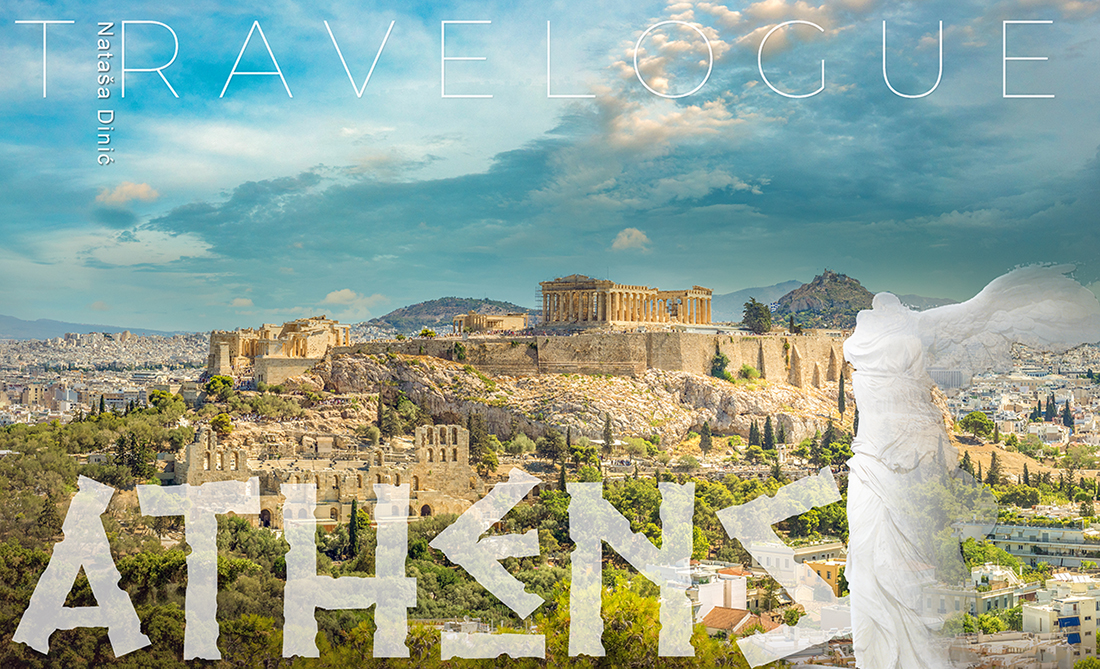
In the Embrace of Ancient Culture and the Aegean Sea Cradle
(first part)
With paper and pencil, we drafted out a plan for our vacation in Greece. First, we would spend six days in Athens, followed by a day trip to the island of Aegina, and would finally spend the last six days on Naxos.
The travel arrangements were made for the second half of August, and we started gearing up for the trip as early as May and June. With my morning coffee, and whenever I could, I would watch with gusto YouTube videos about Athens, the Cyclades, the island of Aegina, Syros, Paros, Naxos, Santorini… And while waiting for Vancouver temperature to go above 15 °C so we could get out of our winter boots – every time I watched a video about Greece, it would give my Mediterranean soul, ever craving sunshine and beach, immense pleasure. It never hurts to listen to tour guides’ and other people’s experiences of the places one has never been to before. So, I also watched (If not then, when?) various historical podcasts about Peloponnesian Wars and the history of Athens from its beginning to the present day.
After browsing, reading and comparing various information online, I decided to stay at the Herodion hotelin Athens and Finikas hotel on the island of Naxos.
We bought online tickets to the Acropolis, as well as return ferry tickets from Athens, i.e. the port of Piraeus to Aegina and from Piraeus to Naxos. My Deary took care of that job.
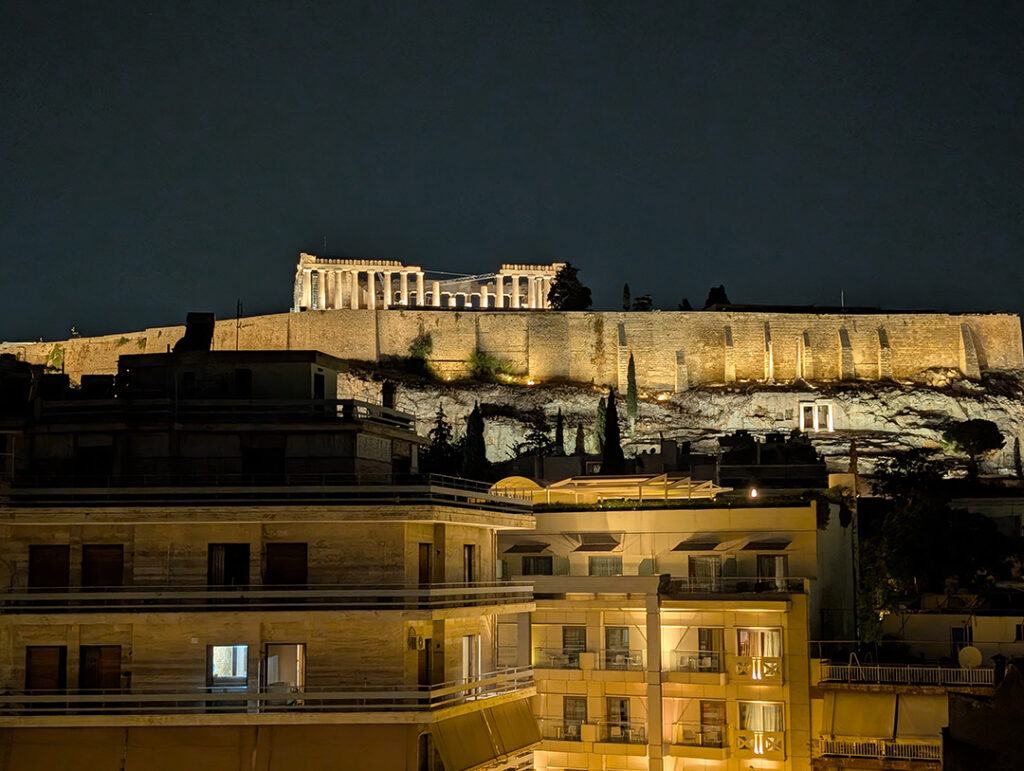
Photo credit: The Cradle Magazine
When this part of the trip planning was complete, we were left with the easier part – shopping for simple linen, silk and cotton wardrobe in white, blue and sand colors, as well as swimsuits, hats, slippers and those little necessities that make travelling easier. In the meantime, I was trying to brush up on a few simple words in Greek I knew, just in case I needed them.
The day came at last! What a joy!
First, we flew from Seattle to Paris, and then from Paris to Athens.
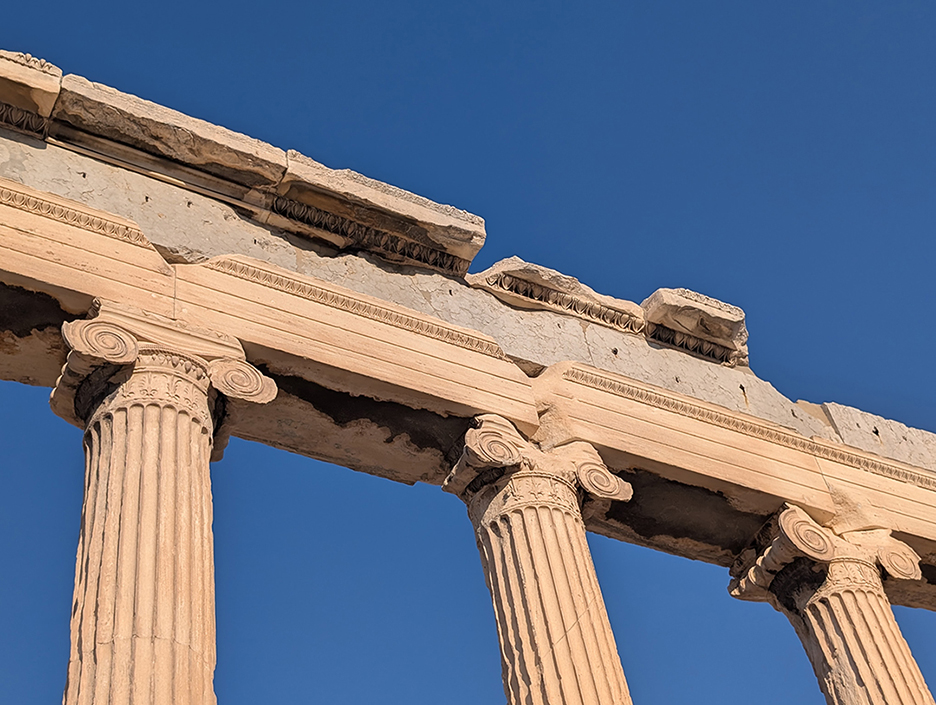
Photo credit: The Cradle Magazine
I looked out the plane window – the endless blue sky and only a few clouds promised a calm and carefree flight. I soon dozed off and the voices of the other passengers slowly disappeared, and with them, the fear of the question: Have I perhaps forgotten to pack any of the important things?
And as it usually happens on international flights: we had at least three meals, watched a few movies, slept a little – as much as is possible in economy class seats – and the plane’s wheels, unusually easily, touched down on the tarmac.
We landed in Athens in the evening. I received a WhatsApp message that a taxi driver named Giorgos was already waiting at the B entrance. We had arranged for the taxi service in advance with the Herodion Hotel and indeed, the taxi driver was waiting for us right on time with that familiar sign with my name on it. Giorgos greeted us with a big smile, first in English, and then in Greek: ‘Kalós írthate stin Athína!’, which we assumed meant – Welcome to AthensWe left the Eleftherios Venizelos airport and our first encounter with Athens was with its warm, thick, Mediterranean air, in which, already in that first breath, one could smell all the scents and nuances of antiquity and perseverance that has lasted for more than three millennia. While Giorgos drove us to the hotel, a calm, sultry summer night hovered invisibly over its dusty streets. With great excitement, pointing in various directions through the car window, he showed us the places that we absolutely had to see, and which, by chance, were on the way to the hotel.
Herodion Hotel
When we arrived in front of the Herodion Hotel that evening, the hotel staff was already waiting for us in the parking lot. We thanked our most kind Giorgos with a pre-learned: Efcharistó!
A very beautiful Greek woman, with a warm voice, at the Herodion front desk, told us in excellent English about all the most important things about the hotel, of which I – now starting to feel the fatigue – only remembered which door leads to the dining room (where we would have breakfast for the next six days), that there is a beautiful terrace on the roof of the hotel with a view of the Parthenon, and on which floor our room was.
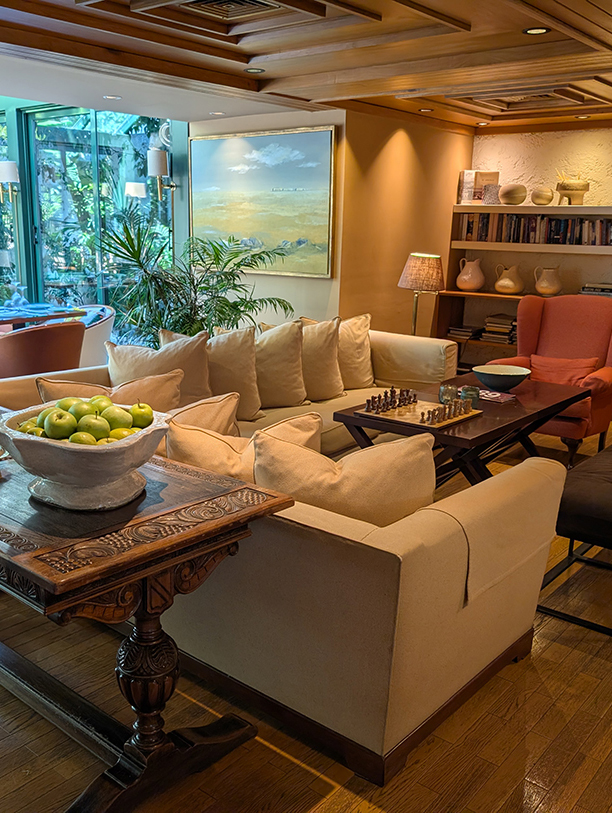
Photo credit: The Cradle Magazine
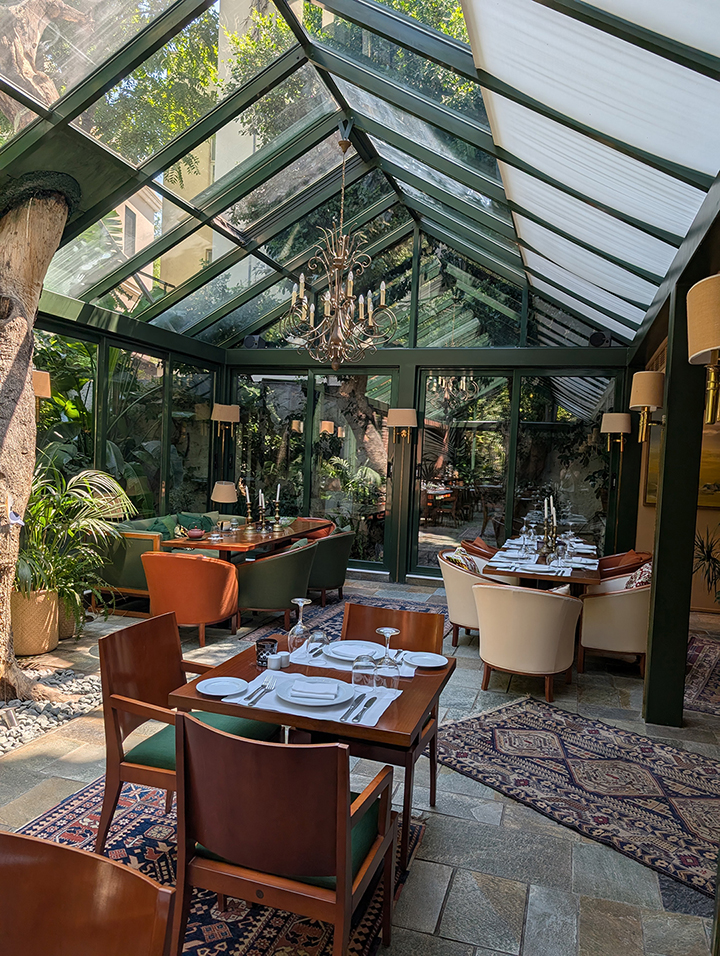
The room was exactly what we needed: cozy, in warm colors, with a tall glass double door and airy, romantic, linen curtains behind which – wrapped in the crown of a laurel tree, as if it were part of its habitat – stretched a beautiful balcony.
After we unpacked and got ready for bed, instead of throwing myself on the bed, I went out onto the balcony, sat back in a comfortable garden chair, and sank into cicadas hum. My dear singers’ song about life reminded me of some long-gone, wonderful times when I spent my summers with my mother in Halkidiki, namely the peninsulas of Kassandra and Sithonia. With a smile on my face, overcome with fatigue, I sank into sleep…
The Acropolis
Unusually fresh (after a long journey), after our favorite – a Mediterranean breakfast, with a bottle of water, we headed towards the Acropolis on foot.
The reason I chose the Herodion was that it is only a seven-minute walk from the Acropolis in Plaka (the oldest neighborhood in Athens); a two-minute walk from the Acropolis Museum; and close to the Ancient Agora of Athens (the ancient marketplace that was the center of Athens during the ancient and Roman periods, and home to the famous Temple of Hephaestus, 5th century BC) and many other archaeological sites.
The sun was slowly rising and began to give everything a dazzling, yet different glow. Giving relief from what otherwise would be unbearable heat – dry, northern Etesian winds (the so-called meltemi) blew through Athens that morning, telling us in their own way that it was time to indulge in pleasure and certainly forget about our hairstyles. Soon we found ourselves in line with tourists from all over the world, who would spend the next four hours on the Acropolis.
We decided not to go with a guide, and we walked around the Acropolis spontaneously and freely.
We first came across the Odeon of Herodes Atticus, an ancient, stone Roman theater, or rather an odeon, located on the southwestern slope of the Acropolis. The odeon was built by the Romans in 161 AD, and was financed by the wealthy Athenian benefactor Herod Atticus in memory of his late wife, Regilla. Unfortunately, this beautiful ancient building was left in ruins by the Heruli (a Germanic tribe) in 267 AD. It was not until around 1950 that the restoration of this odeon began, which since 1957 has served as the venue for the famous Epidaurus Festival every summer, one of the oldest continuously held performing arts festivals in Europe.
I paused, looking up the steep steps of the odeon, imagining the ancient cedar roof that had once been there, and what it must have felt like listening to Pavarotti, Maria Callas, Vangelis, Frank Sinatra, the poetry of my favorite Greek poet, Odysseus Elytis, and watch classical Greek drama in this ancient place.
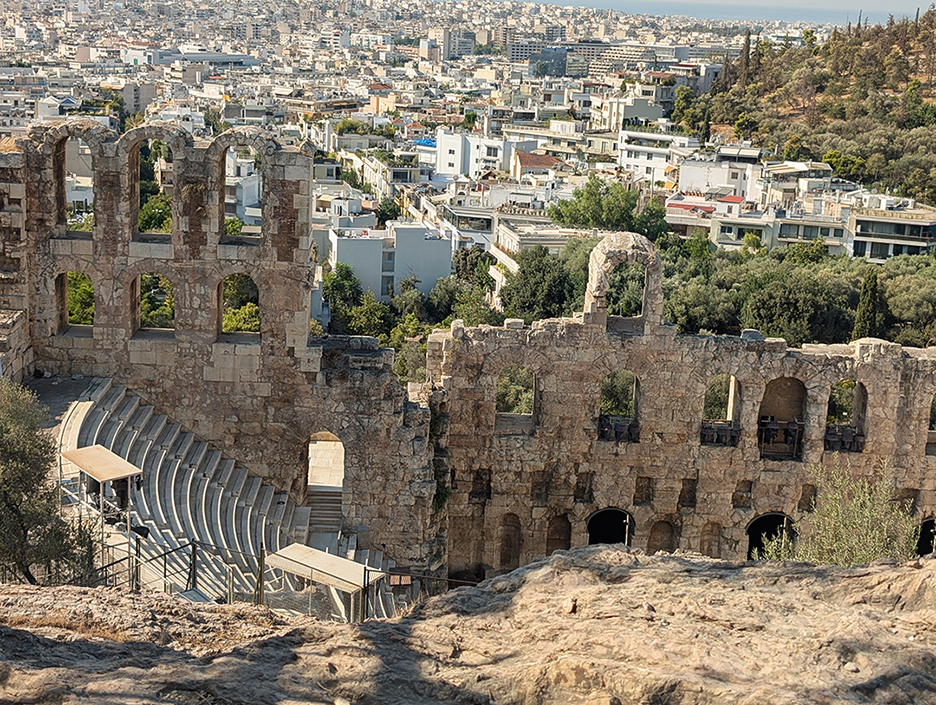
Photo credit: The Cradle Magazine
Past this magnificent odeon, the outlines of the most important buildings on the Acropolis were already visible. These were: the Parthenon, the Propylaea, the Erechtheion, and the Temple of Athena Nike.
The Parthenon
We observed the Parthenon – this still-preserved classical-style building, which has been standing as a temple dedicated to the Greek goddess Athena for almost 2,400 years – in silence, amazed by the beauty of the external Doric columns and metopes, although damaged, still visible in some parts of the temple, and, of course, by the talent and skill of the sculptors and stonemasons of the time, primarily Phidias, who (as I found out) was also responsible for the sculptural decoration of the temple.
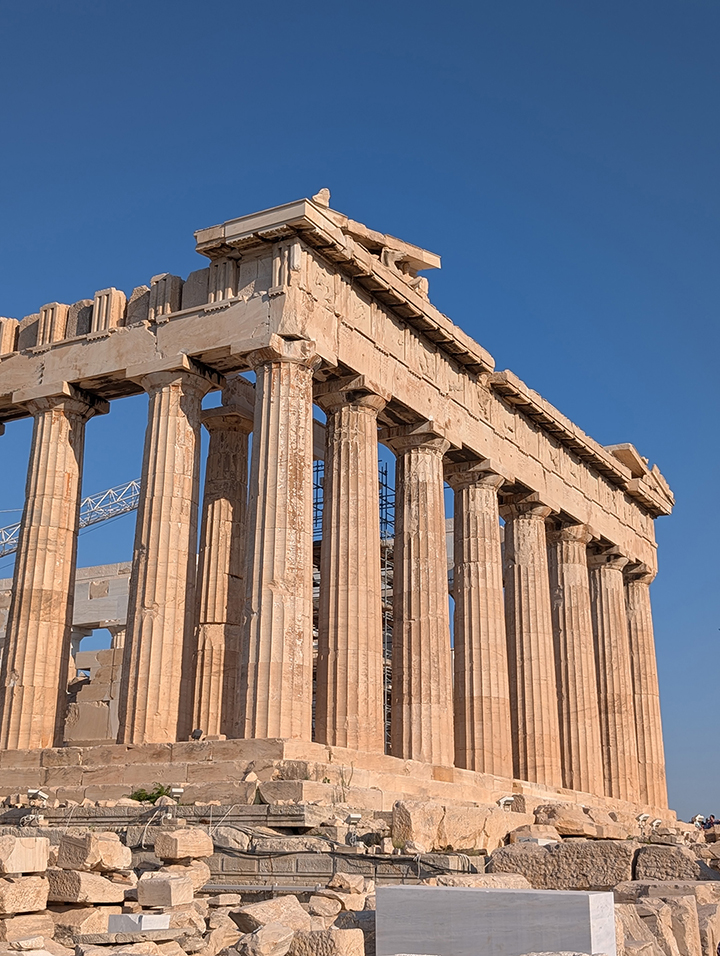
Photo credit: The Cradle Magazine
It is worth mentioning that during the Roman Empire, one of the Roman emperors, in the 5th century AD, took the large statue of the goddess Athena – the only sculpture that belonged to the Parthenon – to Constantinople, where it was later destroyed, probably during the Fourth Crusade, in 1204. Constantinople and Byzantine Empire were then destroyed by the Crusaders, all under the pretext of liberating Jerusalem from the Muslims.
The Parthenon was dedicated to the Virgin Mary during both the Byzantine Empire and the Latin Empire, under the Catholic Church. When the Turkish Sultan Mehmed II conquered Constantinople in 1453, Athens became part of the Ottoman Empire, and the Parthenon served as a mosque. The most serious damage since its construction occurred in 1687, when the Venetians, led by Francesco Morosini, attacked Athens, and the Turks fortified the Acropolis and used the Parthenon as a gunpowder magazine. During the battle, a cannonball hit the storehouse, and the building was partially destroyed. The sculptures inside were destroyed, and the remains of the roof collapsed.
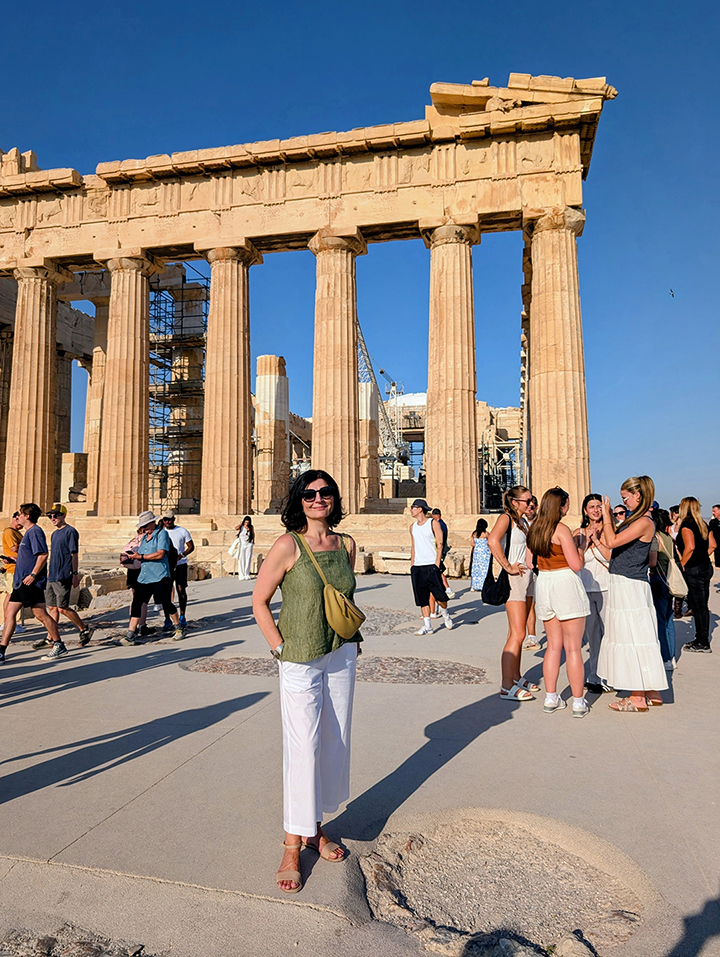
Photo credit: The Cradle Magazine
While the Greek and English governments are still contesting the ownership of the Elgin Marbles and sculptures that Lord Elgin removed from the Parthenon in the early 19th century and brought to England (now in the British Museum), the restoration of the Parthenon and other buildings on the Acropolis – which began back in 1975 – is still ongoing.
The cranes on the Acropolis testify that many buildings are slowly but surely being restored to their former glory. The deadline doesn’t seem to matter that much here.
The Erechtheion
We reached the Erechtheion, about which I knew some basic facts, but when you come face to face with this beautiful building, everything it is about seems to be less important. The Erechtheion enchanted me with its beauty, elegance, portico, and probably because of the famous caryatids, it left the biggest impression on me!
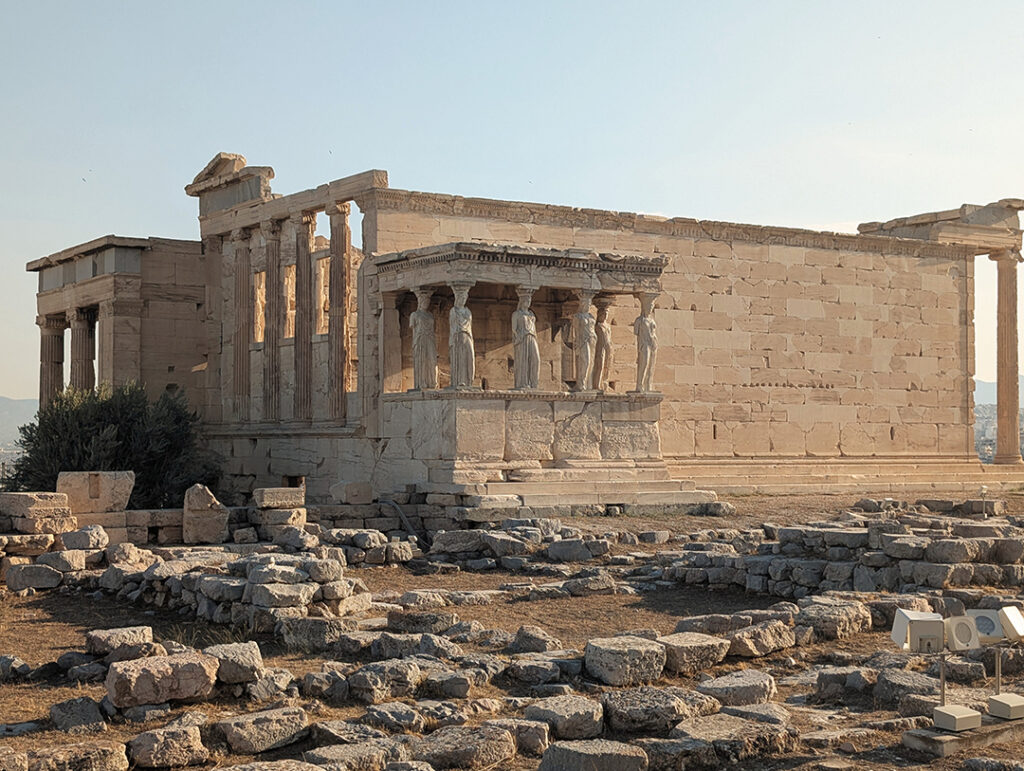
Photo credit: The Cradle Magazine
However, before I continue with the impressions the Acropolis left on me, here are a few lines on the history of the Erechtheion.
The temple was built in the Ionic style. It is dedicated to the god Erichthonius of Athens. King Erichthonius, as legend has it, was the king of Athens, who was born from the land and raised by the goddess Athena. The temple was built from 421 to 406 BC. The main architects were Philocles and Archilochus. This temple was given an unusual shape due to the irregularities of the terrain. The difference in the height of the terrain between the eastern and western sides of the temple is three meters. The eastern side is dedicated to Athena Polias, while the western side served the cult of Poseidon-Erechtheus, as well as an altar in honor of Hephaestus (the god of blacksmiths, metallurgists, and fire) and Butes, the brother of Erechtheus.
According to the legend, Athena’s sacred serpent lived in this temple. It housed the tomb of Cecrops and the remains of the legendary fights between Athena and Poseidon for supremacy over Athens. This temple also served as a church in the Middle Ages, and as the residence of the commander of Athens during the Ottoman Empire.
Circling around the Erechtheion, I somehow lingered most of the time in front of the southern porch, looking at the caryatids (the maidens) – beautiful female sculptural figures, which, as architectural support (replacing columns), are holding a wreath on their heads.
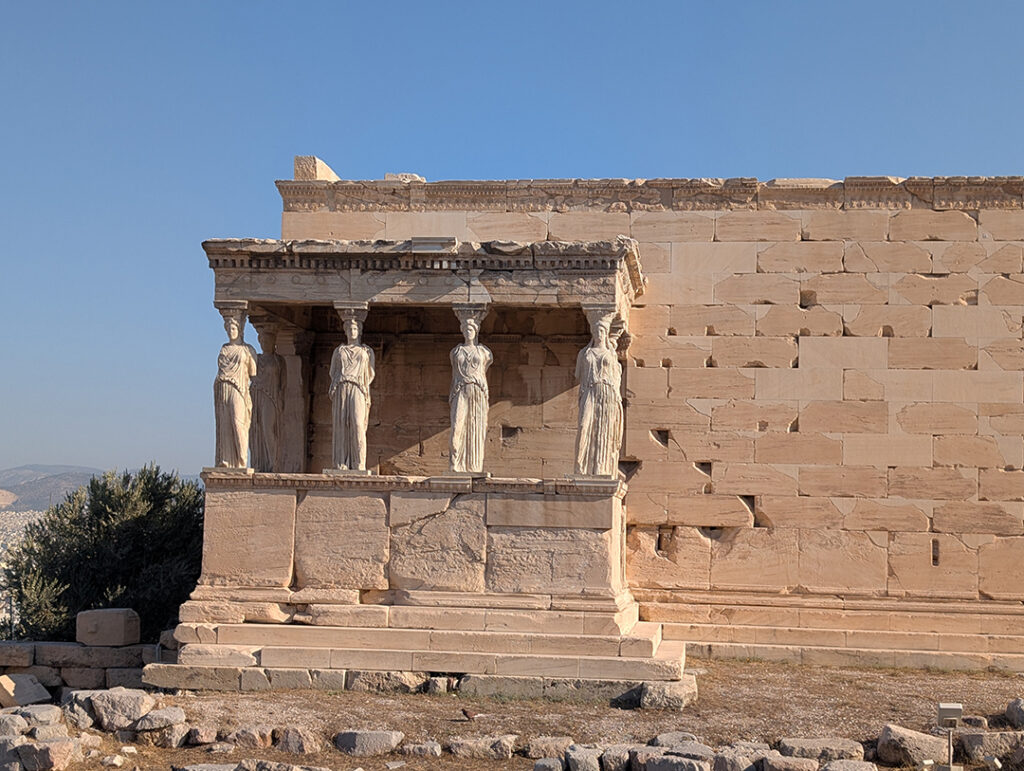
Photo credit: The Cradle Magazine
I tried to imagine what the gatherings at the Artemis festivals in the Peloponnese were like, where the maidens celebrated the goddess of the hunt, wilderness, the mistress and protector of game – Artemis.
What we didn’t know was that the caryatids on the Erechtheion were replicas. The original caryatids – five of the six – have been in the Acropolis Museum since 1978. The reason is clear – the caryatids were transferred to the museum to protect them from damage caused by pollution and the elements.
It should also be noted that the sixth caryatid was taken by the aforementioned Lord Elgin to Great Britain by ship and is still in the British Museum today, awaiting the day when it will be returned to its sisters in Greece.
Let’s hope this will happen eventually!
The Propylaea
The next thing we saw was the Propylaea. They are the porch in front of the entrance to a temple or group of temples and also the main entrance to Greek acropolises. The Propylaea is the monumental entrance gateway to the Acropolis. When the Athenians passed through these gates, they were already on the Acropolis. The Propylaea was destroyed by the Persians in the fifth and sixth centuries BC, who then plundered most of the Acropolis.
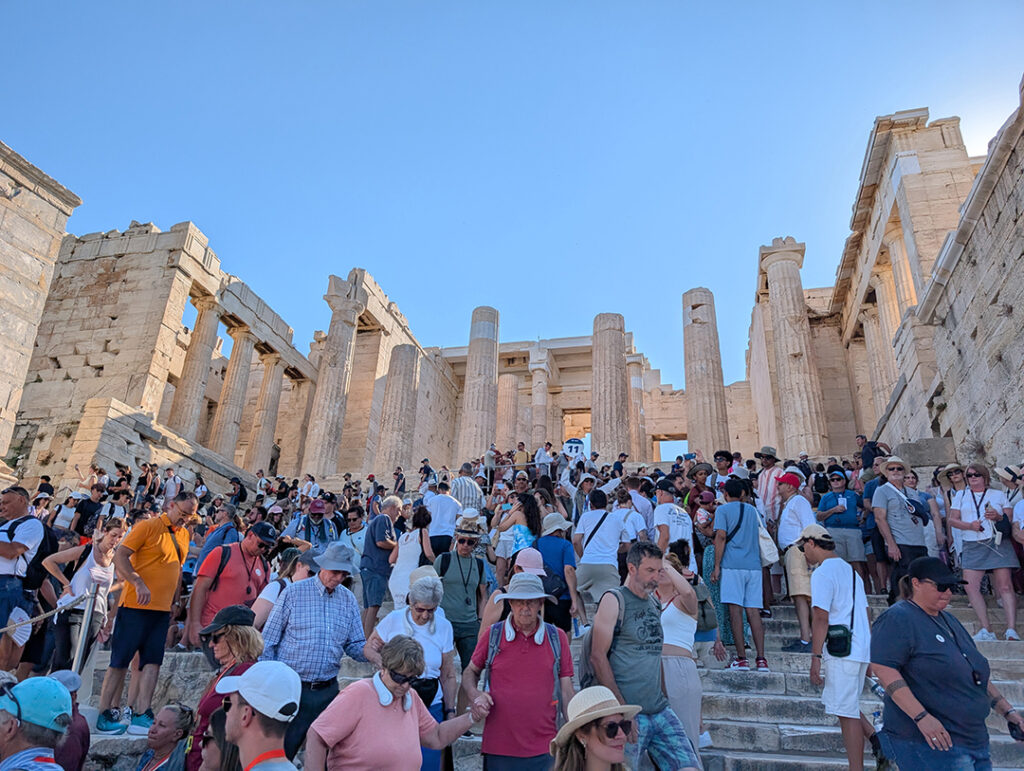
Photo credit: The Cradle Magazine
The preserved propylaea we passed by were built during the golden age of Pericles, between 437 and 432 BC. This entire complex was a fortress, a sanctuary, and also a place where people gathered on important holidays.
Passing by the huge white marble columns, one feels as if time has stopped. Standing by or beneath the columns, between seven and ten meters high, I had the impression that something mysterious was still happening there. Walking around them and enjoying the dance of light and shadow, it seemed as if a delicate golden net had descended on me. And there was something equally magical and magnificent in the almost dried-up grass, which defiantly and tenaciously protruded from the millennia-old marble.
The Temple of Athena Nike
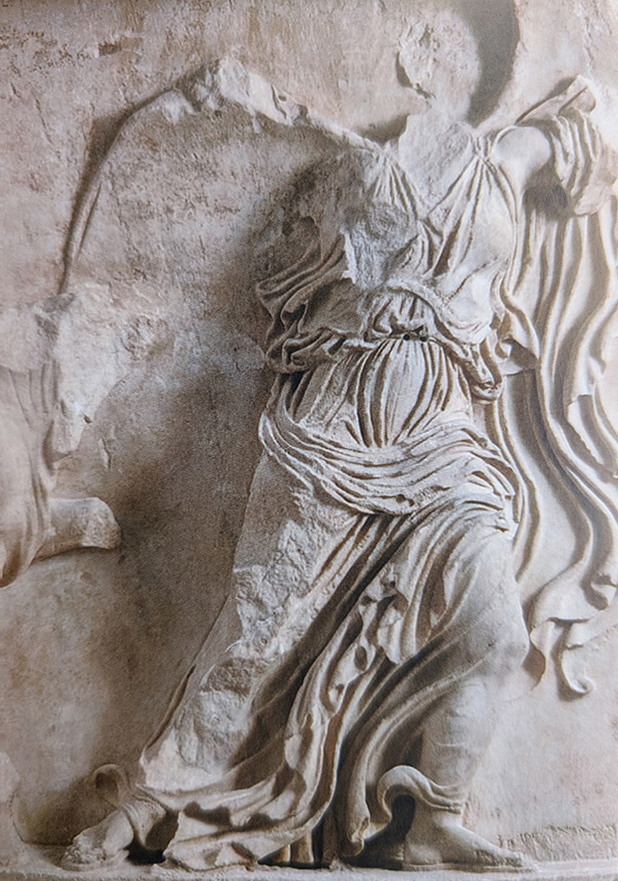
Slowly, we reached the Temple of Athena Nike, dedicated to the goddesses Athena (in Greek mythology, the goddess of civilization) and Nike (the goddess of victory). The temple was built around 420 BC in the famous Ionic style.
The whirlwinds of time have not spared this temple either, where citizens once worshipped the goddesses in the hope of a successful outcome of the Second Peloponnesian War, which was fought against the Spartans.
The sun was approaching its zenith, which meant it was time to head towards the exit from the Acropolis. I don’t know how many times I had to turn around to take another photo, and each new one (due to a new angle, new light, new shadow, new mystery, new detail) seemed even better, even more beautiful… Ah…
As we descended towards the Acropolis Museum along paths packed with fine, baked dust, I thought about how Socrates, Plato, Sophocles, Pericles and many other Greek philosophers, writers, but also all the ordinary people who, above all, loved philosophy, art, beauty and education, once walked along them.
But before visiting the museum, it was time for a break, to gather impressions and, of course, for Greek frappe and souvlaki!